

Flow
Flow measurement instruments quantify the volume or mass of liquids, gases, or steam moving through closed conduits, open channels, or industrial pipelines over a specified time period.
Flow measurement is essential across all process manufacturing, municipal utility management, energy generation, and environmental monitoring. Accurate flow tracking enables accurate customer billing, optimised fluid transport, precise chemical mixing ratios, energy efficiency management, and regulatory compliance for trade effluent and water withdrawal.
Why Flow Measurement Matters
Flow measurement instruments quantify the volume or mass of liquids, gases, or steam moving through closed conduits, open channels, or industrial pipelines over a specified time period.
Flow measurement is essential across all process manufacturing, municipal utility management, energy generation, and environmental monitoring. Accurate flow tracking enables accurate customer billing, optimised fluid transport, precise chemical mixing ratios, energy efficiency management, and regulatory compliance for trade effluent and water withdrawal.
Flow Measurement Technologies
Flow measurement technologies vary according to media properties and operational demands.
Electromagnetic flowmeters utilise Faraday’s law of induction, generating a magnetic field across an insulated pipe section to measure the voltage induced by conductive liquids.
Ultrasonic flowmeters use transit-time or Doppler acoustic techniques, calculating flow velocities by transmitting high-frequency sound waves diagonally across the fluid path.
Differential pressure devices (such as orifice plates and Venturi tubes) infer flow based on pressure drops across flow restrictions using Bernoulli’s principle.
For direct mass flow measurement without temperature or pressure compensation, Coriolis meters measure fluid inertia forces within oscillating tubes, while thermal mass meters measure heat dissipation from heated sensor elements to determine gas mass flow.

Flow Controllers
Flow controllers automatically control the flow rate of a gas or liquid according to a predetermined flow rate. They are not affected by fluctuations in conditions or pressure.

Flow Displays
Flow Displays can display instantaneous flow measured. They are used in conjunction with air or liquid flow transmitters.

Flow Indicators
Flow Indicators are used for visual checks on the flow, presence, colour and condition of a liquid. Special versions are available for steam and condensate.

Flow Meters
Liquid Flow Meters are measuring devices used in various applications to measure the flow rate of a liquid. Types include variable area, paddle wheel, turbine, magmeters, ultrasonic, open channel and laminar flow meters.

Flow Switches
Flow switches are mechanical switches that switch on or off by the flow of a liquid. Flow switches might be used to monitor the flow rate of a liquid and trigger an alarm if the flow is too high or too low. The flow sensor will usually send an electrical signal to a controller.
Products by Category
-

Shunt Orifice SGUV | Platon DS1160
-

Signet Paddlewheel Flow Integral Systems | 9900
Price range: R34,311.00 through R58,073.00 -
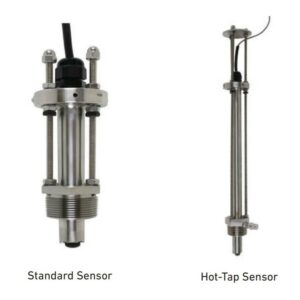
SS High Performance Paddlewheel Flow Sensor | Signet 2540
-

Standard Mount Paddlewheel Flow Sensor | 515
Price range: R9,121.00 through R21,475.00 -
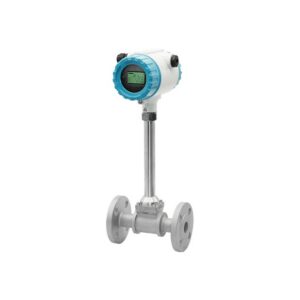
Standard Vortex Flow Meter | QT LUGB
-
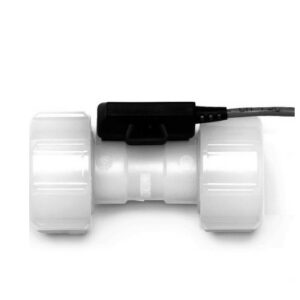
Turbine Flow Sensor | Signet 2100
-
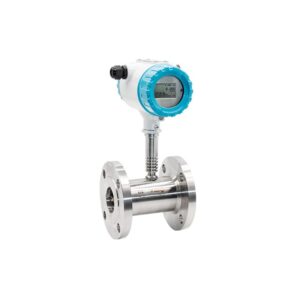
Turbine Liquid Flow Meter | LWGY
-

Ultrasonic Flow Transmitter | RISONIC COMPACT
-

Variable Area Flowmeter | 335
Price range: R3,590.00 through R12,097.00