
Pressure Meters
Pressure meters, including pressure transducers, transmitters, and digital hydrostatic pressure gauges, are precision instruments engineered to continuously measure the force exerted by liquids or gases within pipelines, closed vessels, reservoirs, and natural bodies of water. Measuring pressure is fundamental to maintaining system integrity, diagnosing hydraulic bottlenecks, verifying pump performance, detecting line leaks, and calculating liquid level in deep storage tanks or boreholes.
In municipal and industrial water networks, real-time pressure monitoring ensures that operating pressures stay within safe design limits, preventing catastrophic pipe bursts while maintaining sufficient hydraulic head at distribution endpoints. Fluctuations in pressure serve as an immediate diagnostic indicator for clogged filters, valve failures, or hidden line ruptures.
Why Pressure Meters Matter
Pressure meters, including pressure transducers, transmitters, and digital hydrostatic pressure gauges, are precision instruments engineered to continuously measure the force exerted by liquids or gases within pipelines, closed vessels, reservoirs, and natural bodies of water. Measuring pressure is fundamental to maintaining system integrity, diagnosing hydraulic bottlenecks, verifying pump performance, detecting line leaks, and calculating liquid level in deep storage tanks or boreholes.
In municipal and industrial water networks, real-time pressure monitoring ensures that operating pressures stay within safe design limits, preventing catastrophic pipe bursts while maintaining sufficient hydraulic head at distribution endpoints. Fluctuations in pressure serve as an immediate diagnostic indicator for clogged filters, valve failures, or hidden line ruptures.
Pressure Meter Technologies
Technologically, modern pressure meters rely on robust piezoresistive ceramic diaphragms or solid-state silicon strain gauges enclosed in chemically resistant housings made of materials like PVDF or UPVC. When process fluid exerts force against the sensing diaphragm, microscopic strain causes a measurable change in electrical resistance. Solid-state internal circuitry eliminates measurement drift without physical potentiometers, providing highly accurate, field-scalable 4-20 mA or digital output signals. Advanced pressure sensors also incorporate built-in barometric pressure and temperature compensation circuitry to ensure consistent, highly accurate measurements even under shifting ambient atmospheric conditions.
Products by Category
-

Accurate Dam Level Measurement | RIPRESS Smart
-

Corrosives Pressure Sensor | Type 2450
-

Multi-Parameter Analyser | MP301
-

Portable Multi-Parameter Analyser Kit | MP301+HDC-100A
-
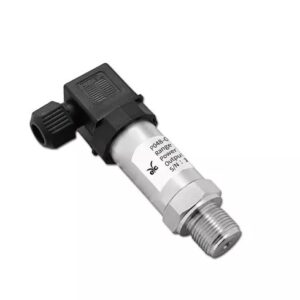
Relative or Absolute Universal Pressure Transmitter | P048
Price range: R2,076.00 through R2,373.00 -

Titanium Spectrometer | Spectro::lyser Titanium Pro