Category: Chemical Level Sensors

Chemical Level Sensors

Chemical Level Sensors are used to determine the level of small or large bodies of chemicals. These sensors are used in corrosive environments where the chemicals would affect the operation of a normal level sensor.

  • Ultrasonic Liquid Level Transmitters | EasyTREK SP–300

    Ultrasonic Liquid Level Transmitters  - Overview

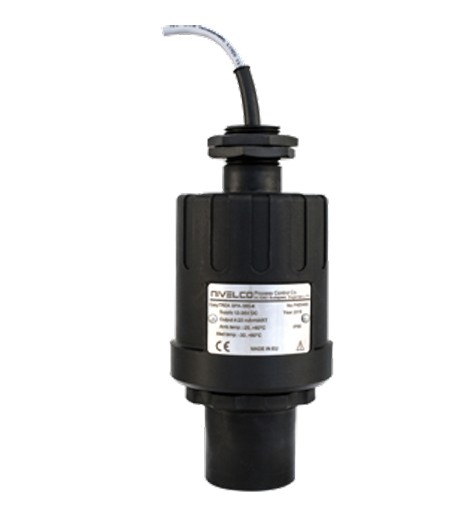
    These high-performance level transmitters measure the level of sump tanks or open-channel flows. These are installed on the tank's roof or above the liquid's surface. The transmitter produces an output signal (analogue or HART® digital) proportional to the liquid level. It has an integrated blind transmitter and is readable and programmable remotely through HART® protocol. There are two mounting options: a 1½" and a 2" process connection. Its 1" threaded neck facilitates suspending it above the medium, a typical water/wastewater application.

     Ultrasonic Liquid Level Transmitters  - Features

    • 2-wire integrated level transmitter
    • Non-contact level measurement
    • Maximum 25 m (82 ft) measuring range
    • Narrow (5°) beam angle
    • Full temperature compensation
    • IP68
    • HART® communication
    • Ex version
    • 5 years warranty


  • Hydrostatic Level Sensor | GF 2250

    Hydrostatic Level Sensor - Overview

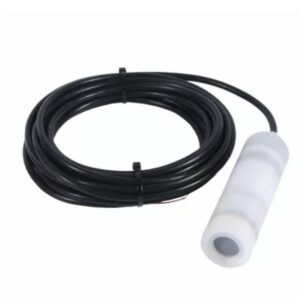
    This hydrostatic level sensor is for level and depth control. It has a one-piece, injection-molded PVDF body and ceramic diaphragm for superior compatibility in corrosive liquids. It can be mounted through the tank wall or submersed from the top of the tank, the hydrostatic sensor measures the weight of a fluid column. The pressure at the sensor is proportional to the change in the tank level. A capillary tube in the cable ensures that changes in the atmospheric pressure can be compensated. This sensor is available with a proprietary digital (S³L) or 4 to 20 mA output. The extended cable and capillary tubing with the union connection and a customer-supplied conduit allow for submersion in process vessels. It is unaffected by harsh conditions because of its high-end PVDF, ceramic and FKM materials. This makes them ideal for difficult applications in harsh process environments. When connected to a GF Signet 9900 transmitter, this will enable you to display measurement values and adjust settings exactly where you want. It is extremely accurate as the highly sensitive hydrostatic sensors detect even small level changes and disregard false level signals from steam, foam or any other debris on the liquid surface.

    Hydrostatic Level Sensor - Features

    • Unaffected by harsh conditions
    • Everything at a glance with GF Signet 9900 transmitter
    • Extremely accurate
    • Ideal for electroplating
    • Level and depth measurement
    • 4 to 20 mA or digital (S3L) output
    • Flush ceramic diaphragm
    • Easy submersible installation
    • Choice of two pressure ranges
    • Standard union connection and extended cable and capillary tubing (10 m)
  • Acid-Alkali Resistant Liquid Level Transmitter | L055

    Acid-Alkali Resistant Liquid Level Transmitter - Overview

    The acid-alkali resistant liquid level transmitter is a completely sealed, fully submersible structure and contains a ceramic capacitor pressure sensor. The probe is manufactured from PVDF acid-alkali resistant materials. The gas-guide cable is made of PTFE liquid level wire, which is mainly used for liquid level measurement of acids, bases and other corrosive mediums. The shell, wire, and other connection parts are sealed completely, which ensures the long service life of the transmitter. The unique inner structure with an anti-condensation function can be widely used in process control, chemistry, environmental protection, and pharmaceutical industries.

    Acid-Alkali Resistant Liquid Level Transmitter - Features

    • The measurement ranges from 0 ... 0.1 ... 20 bar
    • High-purity ceramic manufacturing (99.99% Al2 O3 )
    • Strong corrosion resistance
    • Fluoro-rubber ring waterproof seal
    • Corrosion-resistant design of probe and wire
    • Contains high molecular sieve to prevent condensation
    • Multiple protection structure design
    • High protection ability

    Datasheet