

6 Parameters monitored simultaneously
from more than 20 local & external water sources
The Beijing Waterworks Group Co., Ltd. installed pipe::scan in the drinking water network of more than 5.3 million households to monitor the drinking water quality since 2017.
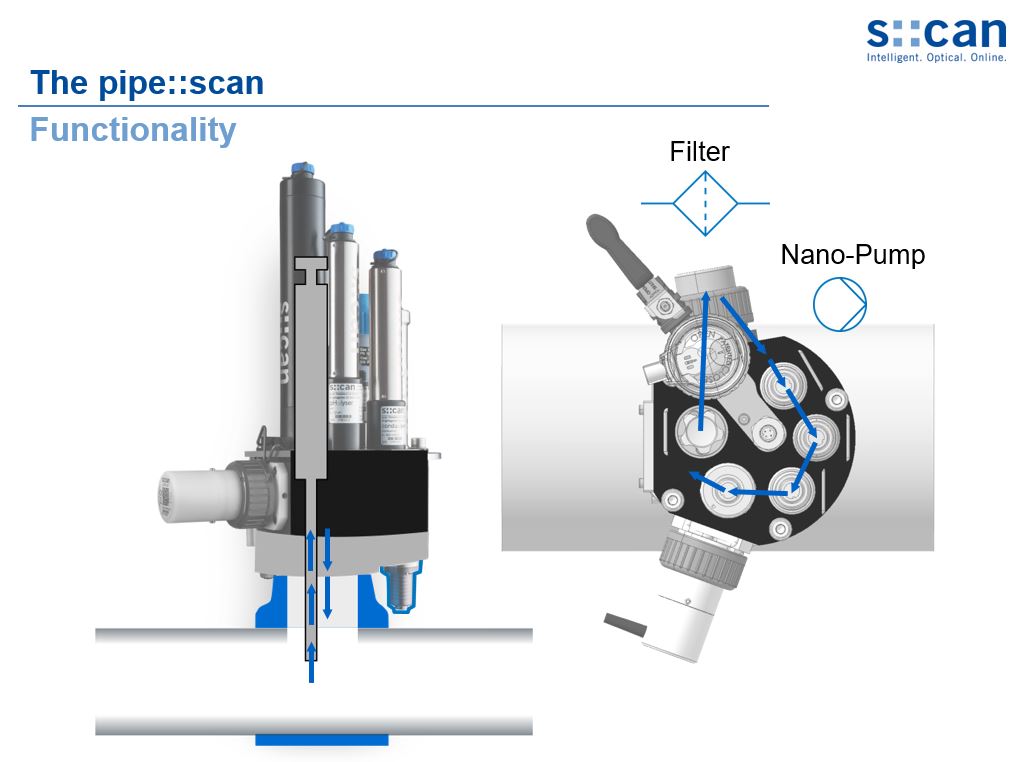
“The pipe::scan measures total chlorine/free chlorine, color, turbidity, pH, conductivity and temperature in one system. Other organic pollution parameters like TOC, DOC, UV254 can be added. After more than 6 months of testing, the equipment is running stable, the measurement is reliable and there is a super long maintenance cycle. These new devices increase the possibility of large-scale monitoring networks in the supply system.”
Yanyang Hou (Manager) – Beijing Clean water Co., Ltd.
Challenges Faced
- Beijing’s water supply includes more than 20 local and external sources which create a complexity in monitoring which is rare
- The ageing urban network threatens water quality so automatic water quality monitoring equipment had to be installed in the pipe network itself
- The installation space of the test site is small
- The pipeline is made of ageing cast iron which in turn could affect the turbidity reading
- Maintenance
- Laboratory validation is required to determine whether the instruments transfer the water quality data correctly to SCADA
s::can’s solution
- For the parameters like turbidity, free/total chlorine, pH and conductivity, the system was equipped with s::can sensors including automatic brush cleaning, and the con::cube terminal
- For the aged pipe, a double-layer filter was added, to make sure that iron particles do not interfere with measurement results.
- SCADA gets the data via the RS485/Modbus protocol from the con::cube.
Benefits
- Real-time monitoring of different parameters so that changes in water quality can be detected timeously
- Maintenance response is faster which improves network reliability
- A better understanding of water quality changes in the entire water supply network using historical and actual readings
- Total chlorine monitoring effectively controls the amount of added chlorine and reduces the formation of disinfection by-products. It also determines the multiplication activities of microorganisms in the pipe network water which enables effective process control operation of the water system
- Extremely low manual maintenance. Only needs regular manual sampling comparison and calibration
- Continuous monitoring with insertion installation
- No discharge and pollution, which leads to water savings
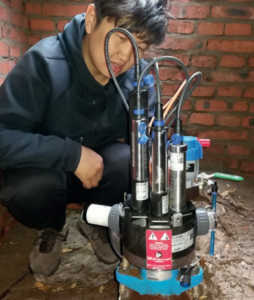
pipe::scan installation in a suburb of Beijing.
The pipe::scan is a sensor system for monitoring drinking water quality in pipes under pressure. It measures up to 10 parameters in one device: TOC, DOC, UV254, Turbidity, Color, Chlorine, pH/Redox, Conductivity, Temperature and Pressure. The water quality data can be sent to any central database via almost any protocol. Multiple pipe::scans are the ideal solution to monitor drinking water at any point in the network.

con::cube
A compact, versatile terminal for data acquisition and station control. Newest processor technology and very flexible options for interfacing to SCADA or any central database systems makes the con::cube in combination with moni::tool a powerful terminal for compact station control.